

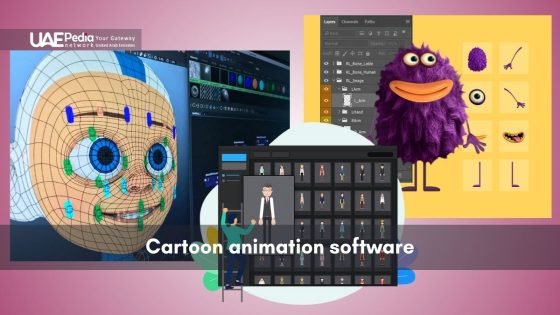
Cartoon animation software powers the creative output of professional studios, educational broadcasters, and independent creators worldwide. According to Rumman – رمان (Rumman.net) comprehensive guide to the Top 10 cartoon programs, choosing the right animation platform depends on production style, team size, and budget constraints. The animation industry, particularly 2D cartoon production, has matured significantly with specialized tools designed for frame-by-frame work, rigged character animation, and vector-based design.
BBC Children’s and Education continues commissioning animated content for broadcast in 2026, including new series produced through development programs like BBC Ignite. Animation remains the driving force behind children’s entertainment, with comedy animation and serialized styles maintaining strong engagement among 7-12 year-olds. This sustained demand reflects the critical role professional animation software plays in content production pipelines.
Professional 2D Cartoon Animation Software
Toon Boom Harmony: Television Industry Standard
Toon Boom Harmony stands as the gold standard for professional television animation production. Emmy-award winning studios including Fox, NBC, and Universal rely on Harmony for broadcast-quality output. The software earned Emmy Awards in 2005 and 2012 and was the platform behind every Emmy-nominated animated series in 2020.
Key capabilities for cartoon production:
- Frame-by-frame and cut-out animation workflows
- Advanced layer system managing complex multi-character scenes
- Automatic coloring and shading tools accelerating production timelines
- 4K resolution support at 200% quality for broadcast delivery
- Professional rigging systems for character consistency across episodes
- Integration with game engines including Unity
Pricing ranges from £27/month for Essentials tier to £123.50/month for studio packages. While premium pricing reflects professional-grade capabilities, the investment typically pays dividends for studios managing multiple projects simultaneously.
Moho Pro: Rigging and 2D Animation Excellence
Moho Pro, formerly Anime Studio, represents the industry standard for professional 2D animation with advanced rigging capabilities. Oscar-nominated animation studios including Cartoon Saloon have relied on Moho throughout production of acclaimed films like The Breadwinner, Song of the Sea, Secret of the Kells, and Wolfwalkers.
Why animation professionals choose Moho Pro:
- Smart Bones system providing precise character control and deformation
- Balance of advanced features with manageable learning curve
- One-time purchase option (£399.99 lifetime) or subscription flexibility
- Enhanced frame-by-frame animation for traditional animation styles
- 3D camera support with depth-of-field effects
- Physics engine for gravity and dynamics simulation
- Seamless Photoshop file importing with layer structure preservation
Professional studios recognize Moho’s versatility. Co-director of Oscar-nominated films using Moho stated the software “creates impressive quantity, variety and quality of work even with small teams, sitting together with more traditional animation styles.”
Adobe Animate: Web-Based and Interactive Cartoon Content
Adobe Animate, successor to Flash Professional, specializes in creating scalable vector-based animations for cartoons, interactive ads, games, and educational content. The software bridges traditional animation with modern web delivery standards.
Practical cartoon applications:
- Creating cartoon videos optimized for web platforms and social media
- Designing interactive HTML5 banner advertisements
- Developing simple 2D browser-based games
- Producing animated educational content for digital learning platforms
- Exporting to multiple formats including GIF, PNG, and video containers
Included with Adobe Creative Cloud subscriptions, Animate integrates seamlessly with Photoshop and After Effects. This ecosystem approach appeals to creators managing multi-tool workflows. The vector-based graphics remain scalable across all display sizes without quality degradation.
Synfig Studio: Free Open-Source Vector Animation
Synfig Studio provides professional-quality cartoon animation capabilities without licensing costs. Launched as open-source software in 2005 under GPL v3 licensing, Synfig offers legitimate commercial use rights for independent and student projects.
Free Synfig Studio features:
- Vector Tweening system automatically generating smooth in-between frames
- Resolution independence enabling rendering at any quality level
- Onion Skinning displaying multiple frames during animation process
- 50+ layer types supporting diverse animation techniques
- Bone system similar to professional rigged animation tools
- Export support for AVI, MPEG, GIF, PNG, and OpenEXR formats
- HDRI and Python scripting for advanced workflows
Students and hobbyists find Synfig an accessible entry point into professional animation practices. However, the smaller community generates fewer plugins and third-party resources compared to commercial alternatives.
Motion Graphics and Visual Effects Software
Adobe After Effects: Industry Standard for Motion Design
Adobe After Effects dominates professional motion graphics and visual effects compositing for animated content. The software won an Oscar for Technical Achievement in 2019 and provides powerful tools for creating complex animations and professional video compositing.
Key features for animation production:
- Advanced 3D camera tracking to integrate CGI elements realistically
- Precise keyframing system for complete motion control
- Massive library of plugins and ready-made templates
- GPU acceleration support speeding production workflows
- Seamless integration with Creative Cloud applications including Photoshop and Premiere Pro
After Effects serves as the final compositing stage for many animated productions, combining rendered animation with effects, color correction, and finishing touches. Monthly subscription costs $22.99-34.49 or $263.88 annually.
SideFX Houdini 20.5: Advanced Procedural Animation
SideFX Houdini represents one of the most powerful animation programs for physical simulation and complex visual effects. Used by Pixar, Disney, and DreamWorks, Houdini features procedural workflows enabling easily adjustable and repeatable effects.
Advanced Houdini capabilities:
- MPM Solver for realistic snow, soil, and mud simulation
- Animation Layers system for easier character animation
- Karma XPU renderer for accelerated GPU and CPU rendering
- Copernicus tool for GPU-based image processing
- Node-based procedural workflow for destruction, explosions, and fluid simulations
Houdini Indie costs $269 annually for small studios earning under $100,000, while the full FX version reaches $4,495 for perpetual licensing. The steep learning curve demands specialized training investment but enables unprecedented creative control.
3D Cartoon Animation Platforms
Blender 4.2 LTS: Free All-in-One Animation Suite
Blender has emerged as a legitimate professional alternative for 3D cartoon animation, used in professional studios worldwide for short films, music videos, and feature-length productions. Version 4.2 LTS provides long-term support until July 2026, ensuring stability for multi-year projects.
Professional-grade features for 3D cartoons:
- EEVEE Next real-time renderer for instant preview feedback
- Cycles photorealistic engine for final production rendering
- Geometry Nodes for procedural character creation and modification
- Grease Pencil integration for 2D drawing inside 3D environments
- Full modeling, rigging, animation, and rendering pipeline
- 100% free with unrestricted commercial licensing
The Blender community provides extensive learning resources, making skill development accessible despite the software’s initial complexity. Professional adoption continues increasing annually.
Cinema 4D: Motion Graphics and Stylized 3D Animation
Cinema 4D excels at stylized 3D cartoon animation with emphasis on motion design and visual appeal. The software’s intuitive interface and built-in Redshift GPU renderer deliver production-ready quality without extensive render farm infrastructure.
Cinema 4D capabilities for cartoon production:
- MoGraph system enabling procedural animation and motion design
- Built-in Redshift engine providing fast photorealistic rendering
- Seamless integration with After Effects via Cineware plugin
- Intuitive interface reducing learning curve versus competing software
- Strong community generating plugins and stylistic extensions
Animation studios producing commercials, broadcast graphics, and stylized 3D content favor Cinema 4D for its balance of power and usability.
Autodesk Maya: Character Animation and Rigging
Autodesk Maya dominates professional 3D character animation, particularly for cinematic-quality cartoon production. Used extensively by Marvel, Pixar, and AAA game studios, Maya represents the industry expectation for complex character animation workflows.
Advanced Maya capabilities:
- Professional-grade rigging tools for complex character structures
- Bifrost Liquids system for realistic cloth, hair, and fluid simulation
- ML Deformer using artificial intelligence for realistic muscle deformation
- Golaem integration for crowd simulation and secondary characters
- Complete 3D production pipeline supporting modeling through rendering
- Cross-platform support for Windows, macOS, and Linux
Maya’s subscription pricing of $1,785 annually reflects its professional positioning. The extended learning curve demands 6-12 months of intensive practice to achieve production workflows, but the investment opens career opportunities across major studios.
Autodesk 3ds Max: Architectural Visualization and Game Development
Autodesk 3ds Max specializes in architectural modeling and game development, running exclusively on Windows. The software excels at architectural visualization and television advertising thanks to advanced modeling tools and the Arnold photorealistic rendering engine.
3ds Max production features:
- Smart Extrude for flexible and fast modeling operations
- Material Switcher managing multiple material variations
- Excellent integration with Arnold and V-Ray renderers
- Modifier Stack system allowing non-destructive design exploration
- Retopology tools automatically rebuilding polygon meshes
- Massive library of models and plugins
While less commonly used for traditional character animation compared to Maya, 3ds Max remains essential for game asset creation and architectural visualization workflows requiring precise modeling capabilities.
Selecting Appropriate Animation Software
Hardware Requirements by Software Category
Lightweight 2D Programs (ideal for independent creators)
- Minimum: Intel Core i3 processor, 4-8GB RAM
- Graphics: Integrated GPU acceptable
- Examples: Synfig Studio, Moho Pro, Adobe Animate
- Setup cost: Minimal hardware investment required
Professional 3D Applications (studio-grade production)
- Recommended: 8-12 core processor, 16-64GB RAM depending on project complexity
- Graphics: NVIDIA RTX series cards for GPU acceleration
- Examples: Maya, Houdini, Cinema 4D, Blender (complex scenes), 3ds Max
- Rendering speed: GPU cards reduce render times from hours to minutes
- Setup cost: Substantial hardware investment justified by production efficiency
Production Technique Considerations
Frame-by-Frame Animation remains the technique of choice for expressive character movement. This method requires 12-24 unique drawings per second depending on desired motion smoothness. Professional studios maintain exposure sheets controlling frame timing precisely.
Cut-Out Animation accelerates production using digital puppets with skeletal rigging. Moho Pro and Toon Boom Harmony excel at this technique, allowing single character designs to move through complex scenes.
Rigged Animation using Smart Bones systems (Moho) or professional skeletal systems (Toon Boom, Maya) enables efficient character animation while maintaining on-model consistency across episodes.
Vector Tweening automatically generates in-between frames between keyposed positions, significantly reducing manual animation workload. Synfig Studio specializes in this approach.
Production Pipeline Integration
Professional studios increasingly integrate multiple software platforms within single projects. For example:
- Character rigging in Moho Pro or Maya
- Animation blocking in Toon Boom Harmony or Maya
- Effects and compositing in After Effects
- Simulation work in Houdini for complex physics
- Architectural elements in 3ds Max
- Final color correction and delivery optimization
Version control systems prevent animator conflicts when multiple artists work simultaneously on complex scenes. Asset management platforms track character rigs across episodes ensuring consistency. Render queue management accelerates final output delivery across different broadcast platforms.
Pricing Models and Budget Planning
| Software | Entry Option | Professional Tier | Licensing Model |
|---|---|---|---|
| Adobe After Effects | $22.99/month | $263.88/year | Monthly/annual subscription |
| Cinema 4D | Annual subscription | Annual subscription | Subscription-based |
| Blender 4.2 LTS | Free | Free | Open-source (GPL v3) |
| Autodesk Maya | $1,785/year | $1,785/year | Annual subscription |
| SideFX Houdini 20.5 | $269/year (Indie) | $4,495 (FX perpetual) | Tiered licensing |
| Autodesk 3ds Max | Annual subscription | Annual subscription | Annual subscription |
| Adobe Animate | Creative Cloud | Creative Cloud | Monthly/annual subscription |
| Moho Pro | Subscription | £399.99 lifetime | One-time or subscription |
| Toon Boom Harmony | £27/month | £123.50/month (studio) | Monthly subscription |
| Synfig Studio | Free | Free | Open-source (GPL v3) |
Subscription models suit studios managing variable project loads, while perpetual licenses benefit creators with consistent long-term needs. Free alternatives eliminate licensing costs entirely, making professional animation accessible to emerging talent.
Learning Pathways and Skill Development
Beginner-accessible programs enable rapid skill development. Adobe Animate appeals to users with prior Adobe experience, while Synfig Studio and Moho Pro offer intuitive rigging interfaces. Educational institutions frequently introduce animation through Cinema 4D before advancing to professional platforms.
Intermediate complexity programs like Cinema 4D and 3ds Max balance professional capabilities with manageable learning curves. Most animators achieve productive workflows within 2-3 months of consistent practice.
Professional-grade training programs like those at BBC Ignite demonstrate that animation remains accessible to emerging talent. Studios discovering new creators emphasize that consistent practice matters more than software proficiency alone.
BBC’s approach to developing animation talent through competitive selection (as evidenced by Blue Zoo Animation Studio winning Doctor Who commission through rigorous pitching) shows industry focus on creative quality over technical software mastery.
Advanced professional tools including Maya and Houdini require 6-12 months of intensive practice to master professional workflows. However, this investment opens career opportunities across major studios producing feature films and AAA games.
Industry Standards and Production Reality
Television animation studios operate under strict production deadlines. Toon Boom Harmony remains standard because its proven reliability across broadcast schedules outweighs cost considerations. Moho Pro’s adoption by Oscar-nominated studios proves that alternative tools can achieve world-class results when combined with exceptional creative talent.
According to BBC children’s media analysis, animation continues driving engagement particularly among 7-12 year-olds. However, funding constraints and declining commissioner investment present ongoing challenges. These industry pressures make software efficiency increasingly valuable.
Studios producing visual effects-heavy content rely on Houdini for procedural simulation capabilities unmatched by competing platforms. After Effects serves as the universal compositing solution, bringing together elements from multiple 3D packages into final deliverables.
Conclusion
Based on the comprehensive analysis from Rumman – رمان, selecting Cartoon animation software requires honest assessment of production requirements. Independent creators producing YouTube content or educational animation may find Synfig Studio or Moho Pro adequate for achieving professional results without subscription expenses. Television studios pursuing broadcast standards should evaluate Toon Boom Harmony’s proven track record, despite premium pricing.
Free alternatives like Blender and Synfig Studio deliver legitimate professional capabilities, enabling skill development without financial barriers. Commercial platforms including Toon Boom Harmony, Moho Pro, Adobe Animate, and After Effects justify their costs through production efficiency and industry adoption.
Professional 3D animation demands specialized tools. Maya dominates character animation across film and gaming industries. Houdini provides unmatched simulation capabilities for visual effects work. Cinema 4D balances motion graphics with stylized animation production. 3ds Max serves architectural visualization and game asset pipelines.
The animation industry values demonstrable creative quality and production efficiency over software brand affiliation. Multiple software platforms increasingly work together within professional pipelines, suggesting animators benefit from foundational skills across varied tools rather than exclusive expertise in single applications.
For additional community engagement and industry updates, creators can connect through Rumman’s platforms.
The 2026 animation landscape offers unprecedented opportunity. Whether pursuing professional studio work or independent content creation, selecting software matched to specific project needs—combined with consistent practice—enables animators to develop the creative mastery that distinguishes exceptional work from routine production.